
HZS90 vs HZS120 Concrete Batching Plant: Specification & Capacity Comparison
A professional comparison of HZS90 vs HZS120 concrete batching plants covering specifications, production capacity, components, ROI, and selection criteria.
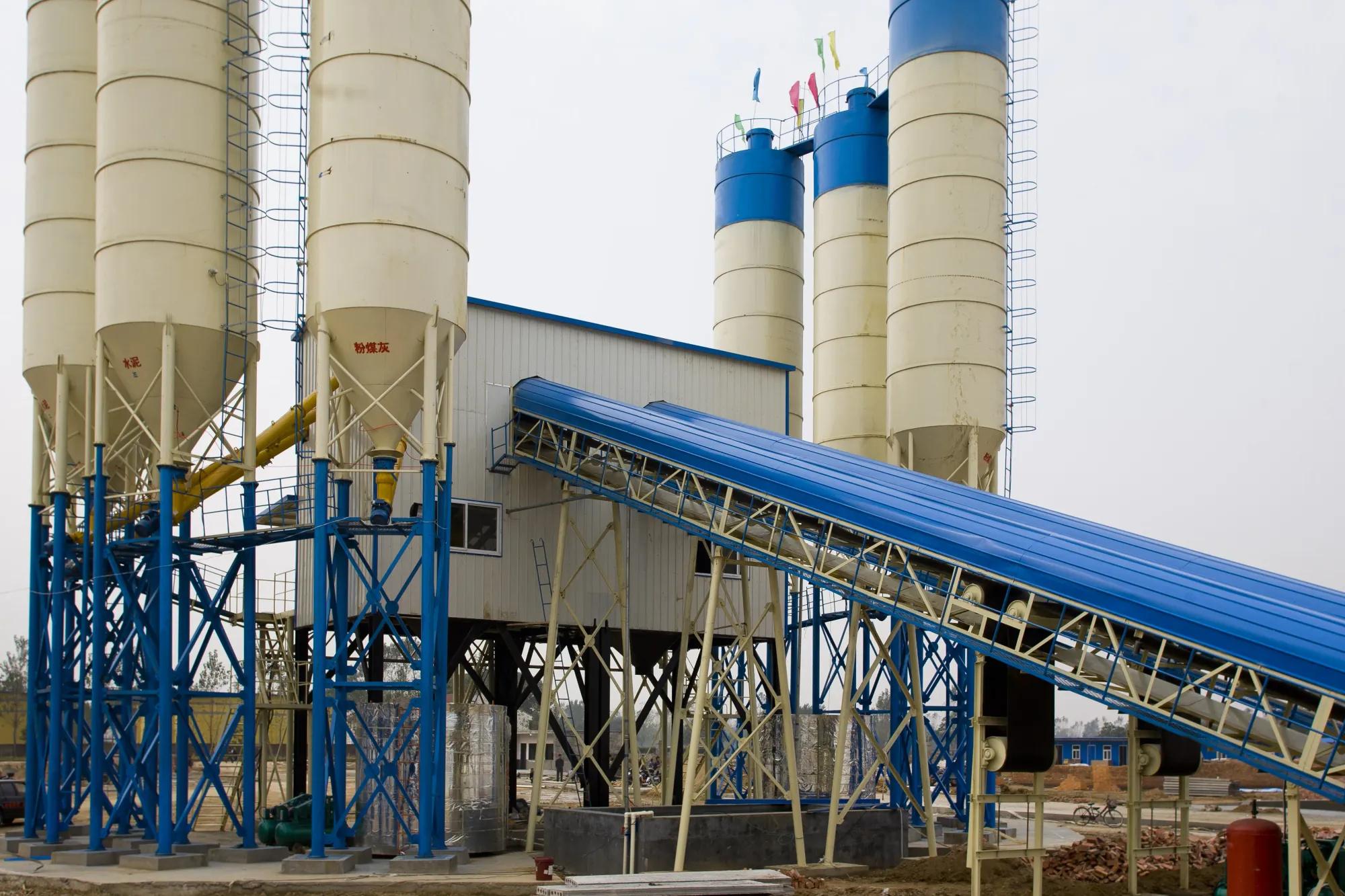
Executive Summary: Core Mechanical Divergence
The primary difference between the HZS90 and HZS120 concrete batching plants lies in their theoretical hourly capacity (90 m³/h vs. 120 m³/h) and the size of their twin-shaft mixers (1.5 m³ vs. 2.0 m³ per batch). While both models serve as highly automated, stationary, belt-fed commercial batching plants, the HZS120 scales up overall power, weighing capabilities, and storage configurations to accommodate larger infrastructure demands.
The practical difference is not only the rated output:
HZS90: Usually equipped with a JS1500 twin-shaft mixer, producing 1.5 m³ of finished concrete per mixing cycle.
HZS120: Usually equipped with a JS2000 twin-shaft mixer, producing 2.0 m³ of finished concrete per mixing cycle.
HZS120 requires higher initial investment, larger foundations, greater electrical capacity, and more aggregate storage volume.
HZS90 offers better flexibility for projects with unstable demand or limited site infrastructure.
For most ready-mix suppliers, the correct selection depends on actual daily concrete demand rather than maximum theoretical production.
Main Technical Parameter of Concrete Batching Plant
The following specifications represent common industry configurations from major Chinese and international concrete batching plant manufacturers. Individual models may vary depending on automation level, aggregate storage configuration, and customization requirements.
| Specification | Unit | HZS120 | HZS90 |
| Productivity | m3/h | 120 | 90 |
| Capacity of Mixer | m3 | 2 | 1.5 |
| Mix Power | kw | 74 | 44 |
| Discharge Height | m | 3.8 | 3.8 |
| Aggregate Bin | Quantity | 4 | 4 |
| Aggregate Bin Capacity | m3 | 3.2 | 2.4 |
| Max. Weighing Value of Aggregate | kg | 1500 | 1300 |
| Max. Weighing Value of Cement | kg | 1100 | 1100 |
| Max. Weighing Value of Water | kg | 1500 | 500 |
| Max. Weighing Value of Additive | kg | 60 | 40 |
| Aggregate Measuring Accuracy | % | ±2% | ±2% |
| Water Measuring Accuracy | % | ±1% | ±1% |
| Cement Measuring Accuracy | % | ±1% | ±1% |
| Additive Measuring Accuracy | % | ±1% | ±1% |
| Cement Silo | _ | Optional | Optional |
| Cement Screw Conveyor | _ | Optional | Optional |
| Cement Silo Capacity | _ | Optional | Optional |
| Control Mode | _ | Auto/Semi Control | Auto/Semi Control |
Deep-Dive Capacity & Output Analytics
Theoretical Capacity vs. Real Production Output
Concrete batching plant capacity is normally calculated under ideal conditions:
- Continuous aggregate supply
- Stable cement and water feeding
- No truck waiting time
- Optimized mixer cycle
- Skilled operators
- Reliable electrical supply
However, actual production is affected by multiple operational factors.
A plant rated at 120 m³/h does not automatically produce 120 cubic meters every operating hour.
Typical real-world efficiency:
| Operating Condition | HZS90 Actual Output | HZS120 Actual Output |
|---|---|---|
| Optimized continuous production | 75–85 m³/h | 100–110 m³/h |
| Normal commercial operation | 60–75 m³/h | 85–100 m³/h |
| Intermittent project supply | 40–60 m³/h | 60–80 m³/h |
Mixing Cycle Difference: 1.5 m³ vs 2.0 m³
The biggest mechanical difference comes from the mixer capacity.

HZS90: JS1500 Twin-Shaft Mixer
A JS1500 mixer generally produces:
- 1.5 m³ finished concrete per cycle
- 40–60 second mixing cycle
- Suitable for moderate delivery requirements
Typical applications:
- Residential construction
- Small commercial buildings
- Rural road projects
- Small precast component production
The smaller batch size provides:
- Lower material waste during production adjustment
- Faster recipe switching
- Reduced power consumption

HZS120: JS2000 Twin-Shaft Mixer
A JS2000 mixer produces:
- 2.0 m³ finished concrete per cycle
- Higher aggregate loading volume
- Better efficiency for continuous truck loading
Advantages:
- 33% larger batch output compared with JS1500
- Fewer mixing cycles per cubic meter
- Reduced mechanical wear per produced cubic meter
- Better compatibility with large ready-mix operations
For example:
Producing 1,000 m³ concrete:
| Mixer | Required Cycles |
|---|---|
| JS1500 (1.5 m³) | Approximately 667 cycles |
| JS2000 (2.0 m³) | Approximately 500 cycles |
The HZS120 completes approximately 25% fewer mixing cycles for the same production volume.
Impact of Truck Loading and Logistics
The plant itself is only one part of production efficiency.
A ready-mix operation depends on:
- Concrete truck arrival frequency
- Aggregate loader efficiency
- Cement silo capacity
- Pneumatic conveying reliability
- Site traffic management
A high-capacity HZS120 plant may lose its advantage if:
- Only a few mixer trucks are available
- Aggregate supply is unstable
- The project demand is below 500 m³/day
For smaller projects, HZS90 can achieve a better utilization rate.
Annual Production Potential
Assuming:
- 8 operating hours/day
- 300 working days/year
- 75% utilization rate
Estimated annual production:
| Plant Model | Estimated Annual Output |
|---|---|
| HZS90 | Approximately 160,000–170,000 m³/year |
| HZS120 | Approximately 210,000–220,000 m³/year |
Actual output depends heavily on project scheduling, concrete demand, and logistics.
Component Comparison: Mixer, Batcher, and Control Systems
Twin-Shaft Mixer Durability: JS1500 vs JS2000
The twin-shaft mixer is the core production component of a batching plant.
Both JS1500 and JS2000 mixers use:
- Horizontal twin mixing shafts
- High-strength mixing arms
- Wear-resistant liners
- Hydraulic discharge systems
- Heavy-duty bearings
JS1500 Mixer Characteristics
Advantages:
- Lower purchase cost
- Lower motor power requirement
- Easier maintenance access
- Suitable for variable production demand
Common maintenance items:
- Mixing arm replacement
- Shaft seal inspection
- Liner plate replacement
- Gear reducer lubrication
JS2000 Mixer Characteristics
Advantages:
- Higher production efficiency
- Larger aggregate processing capability
- Lower cycle frequency
- Better for continuous commercial concrete production
Additional requirements:
- Stronger foundation structure
- Higher electrical capacity
- More frequent wear inspection under intensive operation
For projects exceeding 80,000–100,000 m³ annual production, JS2000 normally provides better long-term economics.
PLD Series Aggregate Batching Precision
The aggregate batching system directly affects concrete quality consistency.

HZS90: PLD2400 Aggregate Batcher
Typical configuration:
- Three or four aggregate bins
- Approximate 2400 L weighing capacity
- Electronic load cell measurement
Suitable for:
- Standard concrete grades
- Medium production volume
- Multiple aggregate recipes
HZS120: PLD3200 Aggregate Batcher
The larger PLD3200 system provides:
- Higher aggregate storage capacity
- Faster charging cycles
- Better synchronization with JS2000 mixers
Benefits:
- Reduced loader waiting time
- Improved continuous production
- Better performance during peak demand
Both systems typically use:
- Precision load cells
- Pneumatic gates
- PLC-controlled weighing sequences
Electrical Weighing & PLC Automation Networks
Modern HZS90 and HZS120 plants rely on automated control systems.
Main components include:
- PLC control cabinet
- Industrial computer interface
- Cement weighing sensors
- Water flow meters
- Aggregate load cells
- Pneumatic valve controls
- Production data recording systems
HZS120 Automation Advantages
Large commercial plants often require:
- Automatic moisture compensation
- Remote monitoring
- Production reports
- Multiple recipe management
- Integration with ERP systems
For ready-mix companies supplying multiple construction sites, advanced automation can significantly reduce operator errors.
ROI & Field Selection: Which Plant Fits Your Project?
Here is how HZS90 and HZS120 stack up on initial footprint, power draw, and real-world daily output.
| CHOOSE HZS90 IF: Optimal for Dedicated Projects Daily concrete requirement is capped under 500 – 600 m3. Site transformer capacity is limited to 200–250 kVA. Focus is on medium highway segments, local infrastructure, or private precast production. Lower initial capital outlay is critical for project cash flow. |
CHOOSE HZS120 IF: Optimal for Commercial Ready-Mix Targeting daily sales of 700 – 1,000+ m3 of commercial concrete. Primary fleet consists of 10 m3 or 12 m3 mixer trucks requiring fast cycle turnaround. Sufficient power supply (315 kVA transformer) and yard footprint available. Long-term operation (>2 years) where production efficiency outweighs initial plant CAPEX. |
Procurement Decision Matrix
| Factor | Recommended Choice |
|---|---|
| Project below 80,000 m³/year | HZS90 |
| Project above 150,000 m³/year | HZS120 |
| Limited power supply | HZS90 |
| Large ready-mix business | HZS120 |
| Temporary construction site | HZS90 |
| Long-term concrete production facility | HZS120 |
Frequently Asked Questions (FAQ)
How much does an HZS90 or HZS120 batching plant foundation cost?
Foundation cost depends on:
- Soil bearing capacity
- Local concrete prices
- Steel structure requirements
- Plant height
- Aggregate storage design
Generally, HZS120 requires a larger foundation because of:
- Heavier mixer assembly
- Larger aggregate batching system
- Increased silo and conveyor loads
A geotechnical survey should be completed before foundation design.
How often should a twin-shaft mixer be maintained?
Typical maintenance schedule:
Daily:
- Check lubrication system
- Inspect discharge gate
- Remove hardened concrete residue
Monthly:
- Check mixing arms
- Inspect shaft seals
- Verify lubrication points
Every 3–6 months:
- Replace heavily worn liners
- Check reducer condition
- Calibrate weighing sensors
Actual intervals depend on aggregate hardness and production intensity.
How much electricity does an HZS90 vs HZS120 consume?
Approximate installed power:
- HZS90: 140–160 kW
- HZS120: 180–220 kW
Actual consumption is lower because motors do not operate continuously at full load.
Typical energy consumption:
- HZS90: approximately 2–3 kWh per m³
- HZS120: approximately 2–3 kWh per m³
The larger plant may achieve slightly lower energy consumption per cubic meter because of improved production efficiency.
Can dust collection systems be upgraded on HZS90 and HZS120 plants?
Yes.
Common environmental upgrades include:
- Cement silo dust collectors
- Aggregate transfer dust covers
- Negative-pressure dust extraction systems
- Water spray systems
- Fully enclosed batching buildings
For urban concrete plants, environmental compliance should be considered during the initial design stage.
Legal & Technical Disclaimer
The specifications and performance data provided in this article represent typical industry configurations for HZS90 and HZS120 concrete batching plants.
Actual parameters may vary depending on:
- Manufacturer design standards
- Mixer configuration
- Automation level
- Aggregate characteristics
- Local electrical standards
- Environmental regulations
- Site installation conditions
Production capacity is affected by operational management, material supply, truck scheduling, and maintenance practices.
Before equipment installation, buyers should consult qualified structural engineers, electrical engineers, and local construction authorities to confirm foundation design, power requirements, safety compliance, and environmental requirements.
Download
About Jayee Lee
Senior Heavy Machinery Service Specialist / Chief Hydraulic & Structural Engineer
Very professional in construction machinery field. Over 15 years working experience
linkedin facebook
 wade shen
 wade shen
 wade shen
 wade shen
Request Technical Blueprints & Factory Quotes
Submit your machinery parameters below. Connect directly with verified, certified heavy industrial manufacturers to receive custom foundation drawings, layout schematics, and direct-from-factory pricing.